

Kupwara’s Natural Lifelines in Distress: Time Running Out for Action
Slow Ecological Collapse: The Story of Kupwara’s Nallahs
Kupwara,Apr,05:Kupwara district in North Kashmir is blessed with abundant natural water resources, among which Nallah Mawar and Nallah Pohru (locally known as Pharou/Pehru) stand out as the most vital. These perennial streams are not merely water bodies; they are the backbone of life in the region, sustaining drinking water supplies, agriculture, horticulture, and overall livelihoods for nearly 70% of the population.
According to official records of the District Administration Kupwara, along with technical reports of the Central Ground Water Board (CGWB) and District Irrigation Plan under PMKSY, Nallah Mawar originates from the snow-fed Shamsabari mountain ranges. It flows through the Mawar–Qalamabad belt of Handwara before merging into the larger Pohru system. Nallah Pohru itself is formed by the confluence of Kehmil and Lolab nallahs and eventually drains into the River Jhelum near Sopore.
Historically, these streams have been lifelines in the truest sense. In times when road connectivity was limited, they even served as important transport routes between Kupwara and Baramulla. More importantly, they continue to play a crucial role in irrigation networks and groundwater recharge, directly supporting the district’s agrarian economy.
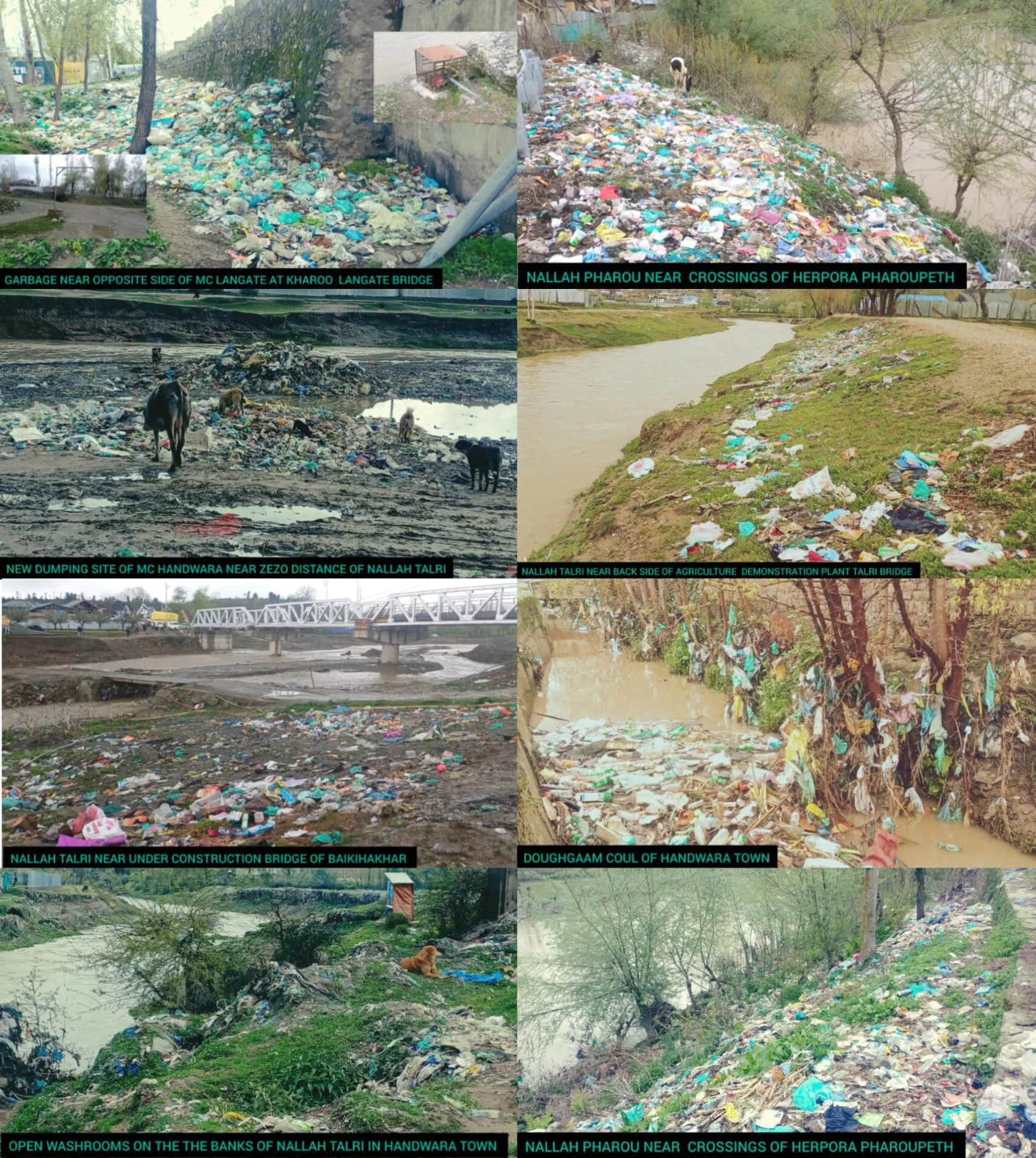
However, this lifeline is now under severe threat.Over the years, unchecked urbanization, unregulated waste disposal, and administrative lapses have turned these once-pristine streams into polluted channels. Sewage from towns and villages flows directly into the nallahs without any treatment. Instead of establishing adequate Sewage Treatment Plants (STPs), drainage systems have been designed to discharge waste straight into these water bodies.
Adding to the crisis is the rampant dumping of solid waste along the banks. Plastic, polythene, and other non-biodegradable materials are visible across stretches in Handwara, Langate, Pharou, and Kupwara. In some areas, even animal carcasses can be seen floating, highlighting the gravity of neglect.
Encroachments and unregulated sand extraction have further disturbed the ecological balance, damaging the natural habitat and reducing the carrying capacity of these streams.
Environmentalists warn that if this trend continues, the damage may soon become irreversible.Despite the formulation of several action plans aimed at intercepting and managing sewage and waste in key towns, implementation remains a distant goal. Projects approved at higher levels are still awaiting funding and execution, reflecting a gap between policy and practice.
The crisis extends beyond these major streams. Smaller water bodies and traditional channels such as Douhgam Koul, Lalkul, Gratkoul, Hardkhari, and Doodkoul are also facing similar neglect, with many either blocked or disappearing entirely.Equally troubling is the lack of accountability at multiple levels. While awareness campaigns, seminars, and social media initiatives are frequently conducted, they have failed to translate into tangible results on the ground. Signboards promoting cleanliness may be visible, but the reality remains unchanged.
This is not solely a government failure; it is a collective one. From authorities to local bodies, and from civil society to individual citizens, everyone shares responsibility for the current state of affairs.The need of the hour is coordinated and sincere action. Establishing functional waste management systems, constructing sewage treatment plants, enforcing strict regulations against dumping and encroachment, and reviving traditional water channels must become immediate priorities.
A few unsung heroes from government departments and civil society continue to work tirelessly for the protection of the environment and natural water resources. Among them is Noorul Shabaz, a young gold medalist from Pharoupeth and founding member of the Pharou Youth Federation, who has taken it upon himself to raise awareness about the deteriorating condition of local water bodies. Calling it a “basic need of the time,” he emphasized that despite repeatedly knocking on the doors of the civil administration, no concrete action has been taken on the ground. He has passionately appealed to the youth to come forward and join hands in safeguarding these vital water resources for future generations.
Local Auqaf committees, religious leaders, civil society groups, and youth organizations must also step forward not just in words, but through meaningful action.Community participation will be key to restoring and protecting these lifelines.
The future of Kupwara depends on the health of its water resources. If Nallah Mawar and Nallah Pohru continue to be neglected, the district risks facing a severe water and environmental crisis in the years to come.
About The Author








Comment List