NEW DELHI: The Supreme Court Collegium has reportedly approved the names of Tahir Majid Shamsi and eight others for appointment as judges of the High Court of Jammu and Kashmir and Ladakh, according to sources.
The reported decision includes prominent legal professionals associated with the region’s judicial and legal institutions. The other eight names are Vishal Sharma, Vikram Kumar Sharma, Namgyal Wangchuk, Pawan Kumar Kundal, Tabasum Zafar, Amit Gupta, Pranav Kohli and Anupam Raina.
The reported approval marks an important development in the process of selecting judges for the High Court, which serves the Union Territories of Jammu and Kashmir and Ladakh. Appointments to constitutional courts are crucial for the effective administration of justice, timely adjudication of cases and strengthening public confidence in the judicial system.
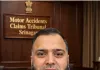
Tahir Majid Shamsi, whose name figures among those reportedly approved, has served as Deputy Solicitor General of India at the Srinagar wing of the High Court. His participation in legal proceedings and representation of the Union government have brought him into contact with a range of matters before the court.
Vishal Sharma, another name on the reported list, has served as Deputy Solicitor General of India at the Jammu wing of the High Court. The inclusion of legal professionals associated with both wings reflects the wider legal fraternity from which judicial appointments are drawn.
The list also includes Tabasum Zafar, along with Vikram Kumar Sharma, Namgyal Wangchuk, Pawan Kumar Kundal, Amit Gupta, Pranav Kohli and Anupam Raina.
The High Court of Jammu and Kashmir and Ladakh exercises jurisdiction over both Union Territories. Its functioning is central to the protection of constitutional rights, resolution of civil and criminal disputes, judicial review of administrative decisions and interpretation of laws applicable in the region.
Under the constitutional appointment process, the Supreme Court Collegium recommends names for appointment to High Courts. The formal appointment process involves the prescribed constitutional authorities, and the Collegium’s approval should be distinguished from the final notification of appointment.
The reported development is expected to draw considerable attention within the legal fraternity of Jammu and Kashmir and Ladakh. Further details concerning the formal recommendations, individual appointments and the date on which the appointments may take effect were not available in the information provided by sources.
The names and the status of the reported approvals remain subject to confirmation through an official Collegium resolution or government notification.












Comment List