

SKUAST-K Strengthens Apple Pest Management Through Farmer Awareness Programme at Watergam
Dr. Ab Qayoom
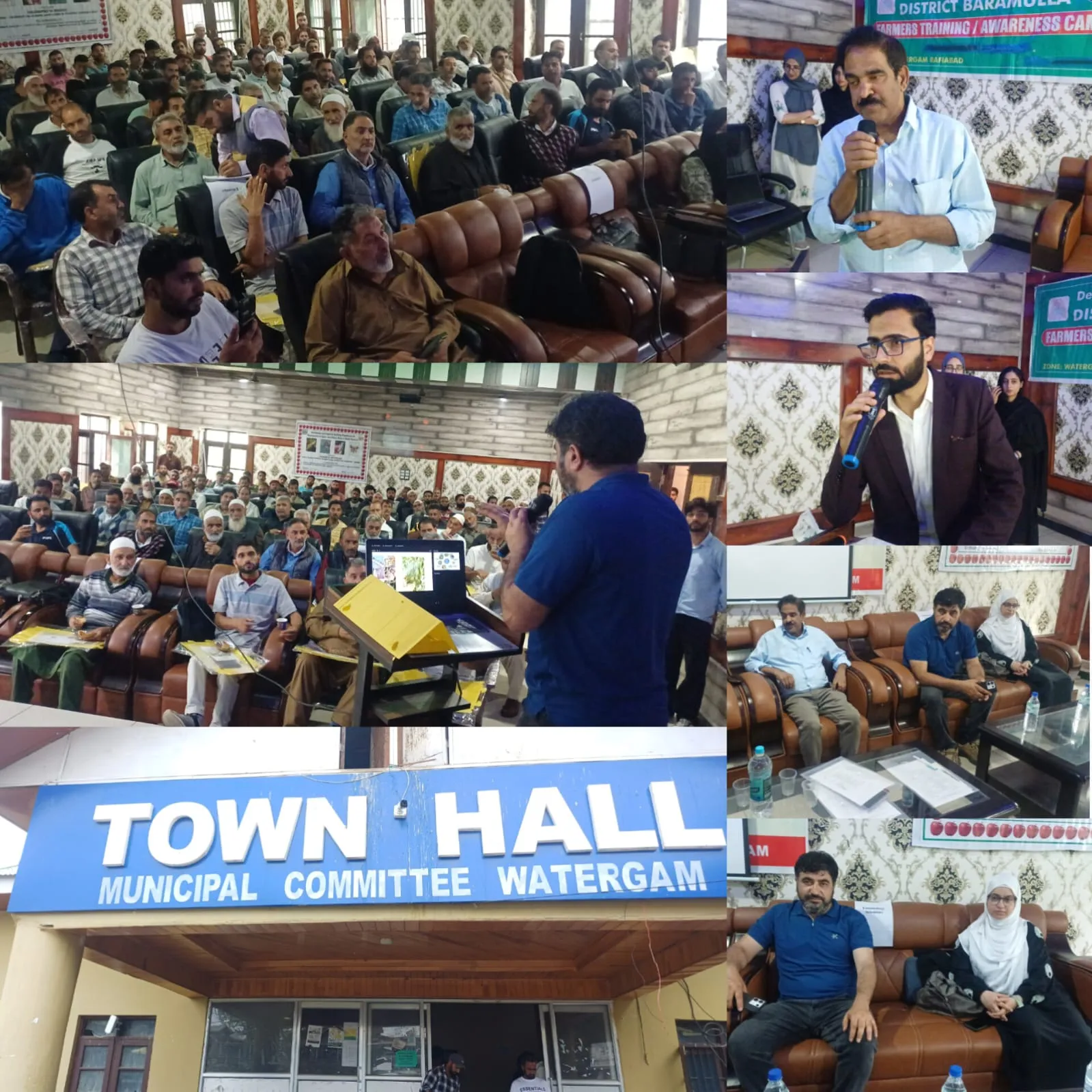
Baramulla,Jul,20: Reinforcing its commitment to sustainable horticulture and scientific farming, Sher-e-Kashmir University of Agricultural Sciences and Technology of Kashmir (SKUAST-K) organised an awareness programme on the scientific management of the Apple Leaf Blotch Miner at the Community Hall, Watergam, in Baramulla district. Sponsored by SKUAST-K, the programme witnessed enthusiastic participation from a large number of apple growers, horticulture officials, scientists and research scholars.
The programme was inaugurated by Prof. Mohammad Jamal Ahmad, Coordinator and Head of the Division of Entomology, Faculty of Agriculture, SKUAST-K, who attended as the chief guest. Among those present were Dr. Ishtiyaq Ahad, Dr. Uzma Arifie, HDO Shakir, scientists, research scholars and other employees of the Department of Horticulture.
Addressing the gathering, Prof. Mohammad Jamal Ahmad stressed that timely scientific intervention is essential to protect apple orchards from emerging pest challenges. He said that the Apple Leaf Blotch Miner has become a significant concern for apple growers, making awareness, early detection and scientific management indispensable for sustaining quality production and improving orchard profitability.
Experts from the Division of Entomology delivered detailed technical sessions on the identification, biology and economic significance of the Apple Leaf Blotch Miner. They explained that integrated pest management (IPM) remains the most effective strategy for controlling the pest while safeguarding environmental and human health.
Prof Ishtiyaq Ahad educated orchardists on the use of pheromone traps for pest monitoring, the need for judicious and need-based application of recommended insecticides, proper spray scheduling and post-harvest orchard management practices. They emphasised that excessive and indiscriminate pesticide use not only increases production costs but also affects ecological balance and fruit quality.
A practical demonstration on the installation and use of pheromone traps was conducted, enabling farmers to gain hands-on knowledge of pest monitoring techniques. The interactive session allowed participants to seek expert guidance on pest-related issues affecting their orchards and receive scientific recommendations tailored to local conditions.
The participating farmers appreciated the initiative and described the programme as highly informative and beneficial. They urged FoA, SKUAST-K to organise similar awareness and capacity-building programmes regularly to keep growers updated on modern technologies, emerging pests and sustainable orchard management practices.
In his concluding remarks, Prof. Mohammad Jamal Ahmad and Dr Uzma Arifie thanked the farmers for their active participation and reaffirmed SKUAST-K's commitment to extending scientific knowledge to farming communities through research-based outreach programmes. He assured growers that the university would continue to provide technical support and advisory services to help improve apple productivity and ensure sustainable horticultural development across Kashmir.
The awareness programme once again highlighted SKUAST-K's proactive role in bridging the gap between scientific research and farming communities, empowering orchardists with practical knowledge to effectively tackle pest challenges while promoting environmentally responsible and economically viable apple cultivation.
About The Author








Comment List