
<% catList.forEach(function(cat){ %> <%= cat.label %> <% }); %>
<%- node_title %>
<% if(node_description!==false){ %><%- node_title %>
Published On
<% if(node_description!==false) { %> <%= node_description %>
<% } %> <% catList.forEach(function(cat){ %> <%= cat.label %> <% }); %>
Read More... 
Aware Children On Prevention of Child Sexual Abuse: Jammu School Edu To HODs
 SRINAGAR: The Directorate of School Education Department, Jammu have asked the Heads of Departments of various institutions through the Chief Education Officers to spread awareness prevention of child sexual abuse in the schools. Directions however, are also issued to make...
Chairman JKBOSE Visits Ladakh To Assess State of Education
 SRINAGAR: Chairman, Jammu & Kashmir Board of School Education (JKBOSE), Prof. Parikshat Singh Manhas, along with Joint Secretary Administration, Prof. Aijaz Ahmad Hakak and other officers from Academic and Administration visited UT of Ladakh to assess the state of education...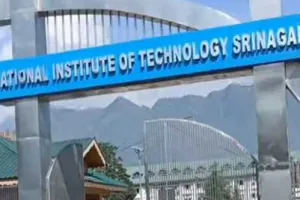
NIT Srinagar Takes Lead In Transforming Education, Successfully Implements NEP-2020
 SRINAGAR: Addressing a Press Conference in Srinagar to mark the third anniversary of NEP 2020 and its implementation in the campus curriculum, the Director said the Institute wholeheartedly embraced the NEP-2020 over the past three years, effectively implementing its principles...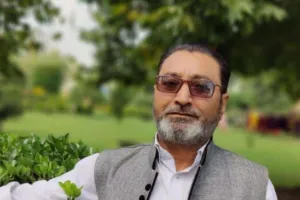
Joint Director Elementary Education Dies of Cardiac Arrest
 SRINAGAR: Joint Director Elementary Education at DSEK Shams-U-Din Tuesday died of heart attack. Officials at DSEK informed the news agency—Kashmir News Observer (KNO) said that the Joint Director was on duty when he felt unconscious in the lawns of Directorate....
Post Covid-19 Impact in Kashmir
 The Covid-19 pandemic has had a profound impact on the world, and Kashmir has not been immune to its effects. Located in the northernmost region of India, Kashmir has been hit hard by the pandemic, with a significant increase in the number of cases and deaths. The local and national authorities have responded in various ways to this crisis, but there have been both successes and failures in their efforts. One of the most significant challenges in Kashmir has been the lack of medical infrastructure and resources. The region has a shortage of hospitals, doctors, and medical equipment, making it difficult to provide adequate care to Covid-19 patients. In addition, the conflict between India and Pakistan over Kashmir has created further obstacles, as travel restrictions and communication blackouts have made it difficult for medical professionals to reach those in need. Despite these challenges, the local authorities have made efforts to combat the spread of Covid-19 in Kashmir. They have implemented measures such as lockdowns, social distancing guidelines, and mask mandates to help reduce the transmission of the virus. These measures have had some success in slowing the spread of Covid-19, but they have also had a negative impact on the local economy and the livelihoods of many people. The national government has also provided support to the region, such as providing financial assistance to individuals and businesses affected by the pandemic. However, the government has been criticized for not doing enough to address the healthcare crisis in Kashmir. Some have accused the government of neglecting the region. One of the most significant challenges faced by the authorities in Kashmir has been misinformation and conspiracy theories surrounding Covid-19. Some people have refused to follow public health guidelines or seek medical treatment due to beliefs that the virus is a hoax or that vaccines are harmful. This has made it difficult for authorities to control the spread of the virus and has led to unnecessary deaths. In response, the authorities have launched public awareness campaigns to educate people about the seriousness of Covid-19 and the importance of following public health guidelines. These campaigns have included messages from local leaders and medical professionals, as well as social media campaigns and outreach to religious leaders. Despite these efforts, there have been failures in the response to the pandemic in Kashmir. The lack of medical infrastructure has made it difficult to provide adequate care to Covid-19 patients, and there have been reports of patients dying due to lack of oxygen and other essential medical supplies. In addition, the conflict in the region has made it difficult for medical professionals to reach those in need, further exacerbating the crisis. The pandemic has also highlighted existing inequalities in the region. Many people in Kashmir live in poverty, and the lockdowns and other measures put in place to combat Covid-19 have had a severe impact on their livelihoods. The government's financial assistance programs have been criticized for not doing enough to support these vulnerable communities. The Covid-19 pandemic has had a significant impact on Kashmir, and the response of the local and national authorities has been mixed. While there have been some successes in slowing the spread of the virus and providing financial assistance, there have also been significant challenges and failures, particularly in addressing the healthcare crisis in the region. Moving forward, it is essential that the authorities in Kashmir continue to prioritize public health and work to address the underlying inequalities and challenges that have been highlighted by the pandemic. Only then can the region recover from this crisis and build a more resilient and equitable future.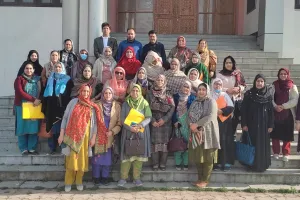
Four-day Workshop Held On ‘Efficient Resourcing and Effective Governance in Newly Formed Clusters’ at DIET Srinagar
 SRINAGAR: DIET Srinagar in collaboration with State Leadership Academy (SLA) SCERT recently conducted a four-day workshop on "Efficient Resourcing and Effective Governance in Newly Formed Clusters" from March 7 to March 10, 2023. The workshop aimed to help Heads of Institutions (HOIs) of High Schools in understanding the Clustering Model, akin to the concept of Special Education Zones, to resolve academic and administrative issues through collaborative understanding and efficient resourcing. Senior Academic Officer, DIET Srinagar, Ms. Nusrat Gilani, welcomed all (HOIs) High Schools to the workshop. Highlighting the significance of the ‘Clustering Model’, which is akin to the concept of Special Education Zones, for HOIs which could help resolve numerous academic and administrative issues through collaborative understanding and efficient resourcing, she also stressed the importance of involving all stakeholders, especially students in the academic-policy making. The workshop also stressed the importance of involving all stakeholders, especially students, in academic policy-making. Participants were divided into groups and engaged in activities to simulate consensus-building and develop a collaborative understanding of practical issues in clusters, enhancing leadership and management skills through community partnership and SMDCs. The keynote speakers, Ms. Tahira Hilali, Principal DIET, and Mr. Fida Gulzar Ahmad, emphasized the need for collaborative and consultative approaches in making clusters effective and methodical. Mr. Ahmad also acquainted HOIs with the perspicacity of tools and techniques of efficient resourcing and good governance with special emphasis on human and physical resource management. Sheikh Sameer, KRP (Key Resource Person), SLA/SCERT JK (UT) deliberated on the importance of understanding the tools and techniques of efficient resourcing through hands-on practice with the latest managerial tools and techniques like SWOC/Measure Concerned Template and Suggestive Framework of School/Complex Development Plan of NCSL (National Center For School Leadership New Delhi). Mir Masood Ali, Senior Academic Officer, SLA/SCERT, threw light on improving learning and learning outcomes and emphasized the significance of various approaches to pedagogy for effective functioning of respective clusters. Ms. Rafiqa Qureshi, HOD, Planning and Management, who helped coordinate the workshop, outlined the concept of the clustering model to HOIs by throwing light on this novel idea, which can help increase productivity, drive the pace of innovation, and simulate the new form of businesses. In conclusion, Ms. Tahira Hilali, Principal, DIET, Srinagar, emphasized the importance of the formation of clusters or complexes, terming it as an opportunity for all HOIs to transform schools into 'Special Education Zones' as per NEP 2020, thereby making schools a better place for students where learning is a joyful activity and schools are adequately equipped in terms of infrastructure, ICT, and other facilities. The workshop concluded with a vote of thanks to all participants and resource persons for making the workshop lively and engaging.