Zojila Tunnel Blasts Into History as Gadkari Watches Asia's Longest Bi-Directional Marvel Break Through

Union Minister Nitin Gadkari Witnesses Milestone as 13-Kilometer Excavation Completes on the ₹6,500-Crore Project That Will End Ladakh's Winter Isolation

Zojila Tunnel Blasts Into History as Gadkari Watches Asia's Longest Bi-Directional Marvel Break Through

HT NEWS DESK

MINAMARG, June 9: The earth trembled with purpose this morning at the Zojila Pass as Union Minister Nitin Gadkari

pressed the detonator, igniting the breakthrough blast that would reverberate far beyond these snow-capped Himalayan

peaks. In that singular moment of controlled explosion, India achieved something that has eluded the region for

generations—the promise of year-round connectivity that transcends the whims of winter and the merciless power of

nature.

The Zojila Tunnel, Asia's longest bi-directional tunnel project, has reached a defining moment. Over 13 kilometers of

excavation work now stands complete, with the tunnel boring machines operating from both ends finally converging deep

within the mountain. What began as an ambitious dream to conquer one of the Himalayas' most formidable barriers is

rapidly becoming tangible reality. The ₹6,500-crore project, which has consumed years of meticulous planning and

relentless effort, moved dramatically closer to its completion today with this historic breakthrough.

The Geography of Isolation

To understand the magnitude of this achievement, one must first comprehend the cruelty of geography that has defined

life in Ladakh for centuries. The Zojila Pass, standing at an elevation of 11,575 feet, is the sole land gateway between

Srinagar and Ladakh. It is a passage that nature has rendered nearly impassable for much of the year. When winter

descends upon the Himalayas, the pass becomes a wall of snow and ice, forcing authorities to close the 280-kilometer

highway that connects these two regions. What follows is months of enforced isolation.

During the winter closure—typically from November through April—the residents of Ladakh find themselves cut off from

the rest of India by road. Supply trucks cannot move. Emergency medical cases cannot be easily evacuated. Students

studying outside the region cannot return home. Elderly people separated from their families by the mountains lose

months of potential connection. For the military, it means the logistics of maintaining border security become

exponentially more complex and costly.

"The Zojila Pass has always been our nemesis," says a veteran driver who has navigated these treacherous curves for

nearly three decades. "We have lost too many friends, too many colleagues to avalanches and whiteout conditions. The

tunnel is not just infrastructure. It is freedom."


An Engineering Triumph Against Nature

The breakthrough ceremony today was far more than a ceremonial gesture. It represented the culmination of extraordinary

engineering effort in one of the world's most hostile environments. Boring through the Himalayan mountain range at this altitude presents challenges that few tunnel projects anywhere have faced The ground composition shifts unpredictably—from stable rock to fractured shale, from water-bearing strata to zones

prone to collapse. The seismic activity in the region adds another layer of complexity. Temperature fluctuations are

extreme. The workforce itself faces constant challenges from altitude-related health issues. Yet, despite these obstacles,

the project has advanced according to schedule, a testament to the technical expertise and determination of the engineers

and construction workers involved.

The tunnel's bi-directional design is a critical feature that distinguishes it from many other mountain tunnels worldwide.

Rather than forcing traffic to alternate directions or creating bottlenecks, the tunnel allows vehicles to travel in both

directions simultaneously, each with its own dedicated lane. This design choice reflects international best practices and

ensures optimal traffic flow while maintaining safety standards.

The breakthrough was achieved through the convergence of two tunnel boring machines—one excavating from the

Srinagar side and one from the Ladakh side. Coordinating these machines to meet precisely underground, separated by

rock yet working toward the same goal, required millimeter-level accuracy and constant monitoring. The successful

breakthrough blast today confirmed that this precision had been achieved.


Strategic Importance Beyond the Highway

While the civilian benefits of the Zojila Tunnel are substantial, the project's strategic significance cannot be overstated.

Ladakh sits at the frontiers of India's national security. The region borders China and Pakistan, making it critical to India's

defense posture. Currently, maintaining military readiness in Ladakh during winter requires expensive and logistically

complex operations involving airlift capacity and alternative routes that add considerable cost to defense preparations.

The tunnel will revolutionize these logistics. Supplies, personnel, and equipment can now move swiftly and continuously

throughout the year. Casualty evacuation becomes faster and more reliable. The cost of maintaining security infrastructure

in the region will decrease substantially. The strategic advantages of year-round road connectivity in a sensitive border

region are immense.

"This tunnel is not just about convenience," acknowledged officials present at the breakthrough ceremony. "It is about

national security and India's strategic reach in the Himalayan region."

Transformation of a Region

The economic implications of the Zojila Tunnel extend far beyond logistics and defense. Ladakh has emerged in recent

years as one of India's premier tourism destinations, attracting adventure seekers, cultural enthusiasts, and travelers from

across the globe. The Leh-Ladakh highway has become legendary among motorcycle and car enthusiasts, but its seasonal

closure has severely limited tourism potential.

Currently, tourism operators must plan their entire season around the winter closure. Many businesses operate at reduced

capacity or shut down entirely during certain months. Hotels struggle with seasonal fluctuations. Tour operators cannot

offer consistent year-round services. The tunnel will transform this landscape entirely.

Once the tunnel becomes operational, Ladakh will be accessible year-round. Winter tourism, currently nearly non-existent,

will become viable. Snow-based activities, winter trekking, and cultural tourism during the quieter months will open new

revenue streams. The entire regional economy—hotels, restaurants, transport services, handicraft businesses, and guides will benefit from extended operational seasons

In Srinagar, the implications are equally significant. Currently positioned as primarily a summer destination, the Valley's

tourism sector will gain new opportunities for winter visitation. The enhanced connectivity will facilitate easier passage for

traders, craftspeople, and entrepreneurs, strengthening the economic bonds between the two regions.

A Long Journey Nearing Its Destination

The breakthrough today marks a crucial milestone, but it is not the finish line. Subsequent phases of the project remain

substantial. The interior finishing of the tunnel must be completed—lining the walls, ensuring structural integrity, and

preparing the surface for traffic. Sophisticated ventilation systems must be installed to manage air quality within the 13-

kilometer passage. Advanced lighting systems will be deployed throughout the tunnel to ensure safe driving conditions.

Emergency refuges, fire suppression systems, and communication infrastructure must be installed and tested

meticulously.

The tunnel must be equipped with intelligent traffic management systems, CCTV surveillance, and automated incident

detection capabilities. All systems must be tested exhaustively before the tunnel is opened to public traffic. International

safety standards for road tunnels must be met and verified. This phase of work, while less dramatic than the breakthrough

excavation, is equally critical to the project's success.

Officials estimate that the remaining work will take several years, though completion timelines have been accelerating.

Each milestone brings the region closer to the transformative change that this project promises.

The Human Cost and Dedication

Behind every technical achievement lies human effort, often under extraordinary circumstances. Thousands of workers

have labored at high altitude in harsh conditions to make this tunnel possible. Engineers and technicians have worked in

challenging terrain, dealing with weather extremes and the physical toll of altitude. Project managers have coordinated

complex logistics across rugged mountain geography.

The breakthrough ceremony, while celebratory, is also a moment to acknowledge the dedication of these individuals.

Workers stood in the cold mountain air, many who had spent months or years at this location, witnessing the moment

when their efforts converged into a tangible breakthrough.

A Symbol of What Is Possible

The Zojila Tunnel represents something profound in the Indian consciousness. It symbolizes the nation's determination to

overcome geographical limitations through technological innovation and sustained effort. It demonstrates that even the

mightiest natural barriers can be conquered through human ingenuity, planning, and perseverance.

In the years to come, when families drive through this tunnel in the middle of winter to visit relatives in Ladakh, when truck

drivers transport goods unimpeded by seasonal restrictions, when tourists experience Ladakh in all seasons, and when

soldiers move supplies across the frontier with greater ease—in all these moments, the significance of today's

breakthrough will be fully realized.

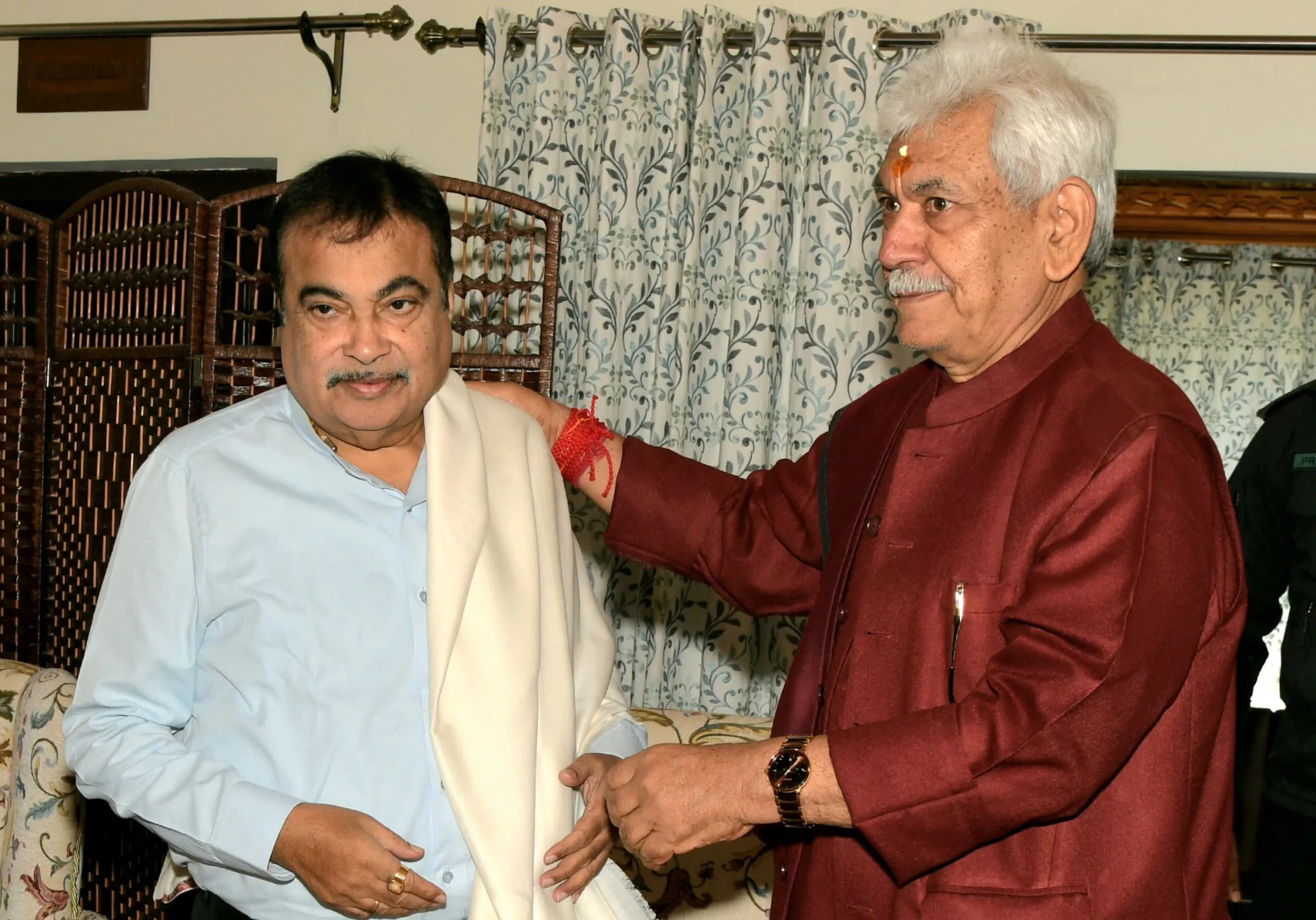
For now, Union Minister Nitin Gadkari's presence at the breakthrough ceremony underscored the national importance of

this project. His witness to the blast confirmed that India's government recognizes this achievement as a milestone worthy

of celebration and as a symbol of the nation's commitment to transforming infrastructure in its most fulfilment regions

As the dust settled on the Himalayan slopes this morning and the echo of the breakthrough blast faded into the distance,

one thing became clear: the Zojila Tunnel is no longer a distant dream. It is becoming a reality that will reshape life,

commerce, security, and opportunity in one of India's most strategic and beautiful regions. The mountains have been

pierced, and the promise of connection has moved measurably closer to fulfillment


09 Jun 2026 By HT Online Editor

Zojila Tunnel Blasts Into History as Gadkari Watches Asia's Longest Bi-Directional Marvel Break Through

Union Minister Nitin Gadkari Witnesses Milestone as 13-Kilometer Excavation Completes on the ₹6,500-Crore Project That Will End Ladakh's Winter Isolation

MINAMARG, June 9: The earth trembled with purpose this morning at the Zojila Pass as Union Minister Nitin Gadkari

pressed the detonator, igniting the breakthrough blast that would reverberate far beyond these snow-capped Himalayan

peaks. In that singular moment of controlled explosion, India achieved something that has eluded the region for

generations—the promise of year-round connectivity that transcends the whims of winter and the merciless power of

nature.

The Zojila Tunnel, Asia's longest bi-directional tunnel project, has reached a defining moment. Over 13 kilometers of

excavation work now stands complete, with the tunnel boring machines operating from both ends finally converging deep

within the mountain. What began as an ambitious dream to conquer one of the Himalayas' most formidable barriers is

rapidly becoming tangible reality. The ₹6,500-crore project, which has consumed years of meticulous planning and

relentless effort, moved dramatically closer to its completion today with this historic breakthrough.

The Geography of Isolation

To understand the magnitude of this achievement, one must first comprehend the cruelty of geography that has defined

life in Ladakh for centuries. The Zojila Pass, standing at an elevation of 11,575 feet, is the sole land gateway between

Srinagar and Ladakh. It is a passage that nature has rendered nearly impassable for much of the year. When winter

descends upon the Himalayas, the pass becomes a wall of snow and ice, forcing authorities to close the 280-kilometer

highway that connects these two regions. What follows is months of enforced isolation.

During the winter closure—typically from November through April—the residents of Ladakh find themselves cut off from

the rest of India by road. Supply trucks cannot move. Emergency medical cases cannot be easily evacuated. Students

studying outside the region cannot return home. Elderly people separated from their families by the mountains lose

months of potential connection. For the military, it means the logistics of maintaining border security become

exponentially more complex and costly.

"The Zojila Pass has always been our nemesis," says a veteran driver who has navigated these treacherous curves for

nearly three decades. "We have lost too many friends, too many colleagues to avalanches and whiteout conditions. The

tunnel is not just infrastructure. It is freedom."


An Engineering Triumph Against Nature

The breakthrough ceremony today was far more than a ceremonial gesture. It represented the culmination of extraordinary

engineering effort in one of the world's most hostile environments. Boring through the Himalayan mountain range at this altitude presents challenges that few tunnel projects anywhere have faced The ground composition shifts unpredictably—from stable rock to fractured shale, from water-bearing strata to zones

prone to collapse. The seismic activity in the region adds another layer of complexity. Temperature fluctuations are

extreme. The workforce itself faces constant challenges from altitude-related health issues. Yet, despite these obstacles,

the project has advanced according to schedule, a testament to the technical expertise and determination of the engineers

and construction workers involved.

The tunnel's bi-directional design is a critical feature that distinguishes it from many other mountain tunnels worldwide.

Rather than forcing traffic to alternate directions or creating bottlenecks, the tunnel allows vehicles to travel in both

directions simultaneously, each with its own dedicated lane. This design choice reflects international best practices and

ensures optimal traffic flow while maintaining safety standards.

The breakthrough was achieved through the convergence of two tunnel boring machines—one excavating from the

Srinagar side and one from the Ladakh side. Coordinating these machines to meet precisely underground, separated by

rock yet working toward the same goal, required millimeter-level accuracy and constant monitoring. The successful

breakthrough blast today confirmed that this precision had been achieved.


Strategic Importance Beyond the Highway

While the civilian benefits of the Zojila Tunnel are substantial, the project's strategic significance cannot be overstated.

Ladakh sits at the frontiers of India's national security. The region borders China and Pakistan, making it critical to India's

defense posture. Currently, maintaining military readiness in Ladakh during winter requires expensive and logistically

complex operations involving airlift capacity and alternative routes that add considerable cost to defense preparations.

The tunnel will revolutionize these logistics. Supplies, personnel, and equipment can now move swiftly and continuously

throughout the year. Casualty evacuation becomes faster and more reliable. The cost of maintaining security infrastructure

in the region will decrease substantially. The strategic advantages of year-round road connectivity in a sensitive border

region are immense.

"This tunnel is not just about convenience," acknowledged officials present at the breakthrough ceremony. "It is about

national security and India's strategic reach in the Himalayan region."

Transformation of a Region

The economic implications of the Zojila Tunnel extend far beyond logistics and defense. Ladakh has emerged in recent

years as one of India's premier tourism destinations, attracting adventure seekers, cultural enthusiasts, and travelers from

across the globe. The Leh-Ladakh highway has become legendary among motorcycle and car enthusiasts, but its seasonal

closure has severely limited tourism potential.

Currently, tourism operators must plan their entire season around the winter closure. Many businesses operate at reduced

capacity or shut down entirely during certain months. Hotels struggle with seasonal fluctuations. Tour operators cannot

offer consistent year-round services. The tunnel will transform this landscape entirely.

Once the tunnel becomes operational, Ladakh will be accessible year-round. Winter tourism, currently nearly non-existent,

will become viable. Snow-based activities, winter trekking, and cultural tourism during the quieter months will open new

revenue streams. The entire regional economy—hotels, restaurants, transport services, handicraft businesses, and guides will benefit from extended operational seasons

In Srinagar, the implications are equally significant. Currently positioned as primarily a summer destination, the Valley's

tourism sector will gain new opportunities for winter visitation. The enhanced connectivity will facilitate easier passage for

traders, craftspeople, and entrepreneurs, strengthening the economic bonds between the two regions.

A Long Journey Nearing Its Destination

The breakthrough today marks a crucial milestone, but it is not the finish line. Subsequent phases of the project remain

substantial. The interior finishing of the tunnel must be completed—lining the walls, ensuring structural integrity, and

preparing the surface for traffic. Sophisticated ventilation systems must be installed to manage air quality within the 13-

kilometer passage. Advanced lighting systems will be deployed throughout the tunnel to ensure safe driving conditions.

Emergency refuges, fire suppression systems, and communication infrastructure must be installed and tested

meticulously.

The tunnel must be equipped with intelligent traffic management systems, CCTV surveillance, and automated incident

detection capabilities. All systems must be tested exhaustively before the tunnel is opened to public traffic. International

safety standards for road tunnels must be met and verified. This phase of work, while less dramatic than the breakthrough

excavation, is equally critical to the project's success.

Officials estimate that the remaining work will take several years, though completion timelines have been accelerating.

Each milestone brings the region closer to the transformative change that this project promises.

The Human Cost and Dedication

Behind every technical achievement lies human effort, often under extraordinary circumstances. Thousands of workers

have labored at high altitude in harsh conditions to make this tunnel possible. Engineers and technicians have worked in

challenging terrain, dealing with weather extremes and the physical toll of altitude. Project managers have coordinated

complex logistics across rugged mountain geography.

The breakthrough ceremony, while celebratory, is also a moment to acknowledge the dedication of these individuals.

Workers stood in the cold mountain air, many who had spent months or years at this location, witnessing the moment

when their efforts converged into a tangible breakthrough.

A Symbol of What Is Possible

The Zojila Tunnel represents something profound in the Indian consciousness. It symbolizes the nation's determination to

overcome geographical limitations through technological innovation and sustained effort. It demonstrates that even the

mightiest natural barriers can be conquered through human ingenuity, planning, and perseverance.

In the years to come, when families drive through this tunnel in the middle of winter to visit relatives in Ladakh, when truck

drivers transport goods unimpeded by seasonal restrictions, when tourists experience Ladakh in all seasons, and when

soldiers move supplies across the frontier with greater ease—in all these moments, the significance of today's

breakthrough will be fully realized.

For now, Union Minister Nitin Gadkari's presence at the breakthrough ceremony underscored the national importance of

this project. His witness to the blast confirmed that India's government recognizes this achievement as a milestone worthy

of celebration and as a symbol of the nation's commitment to transforming infrastructure in its most fulfilment regions

As the dust settled on the Himalayan slopes this morning and the echo of the breakthrough blast faded into the distance,

one thing became clear: the Zojila Tunnel is no longer a distant dream. It is becoming a reality that will reshape life,

commerce, security, and opportunity in one of India's most strategic and beautiful regions. The mountains have been

pierced, and the promise of connection has moved measurably closer to fulfillment


https://www.dailyheadlinestoday.com/kashmir/zojila-tunnel-blasts-into-history-as-gadkari-watches-asias-longest/article-9037
Tags:

About The Author

Post Comment

Comment List